At Reality K9, we practice Foundation Style Dog Training. This method was developed by world-renowned trainer Michael D’Abruzzo of K9-1 Specialized Dog Training.
In this method, concepts build off one another to form a comprehensive training plan that addresses the entire dog.
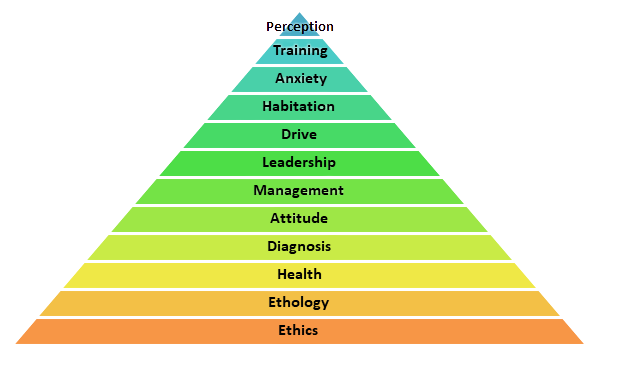
The method prioritizes scientific integrity and ethically sound training practices that recognize the value of both positive reinforcement and properly introduced aversives.
Training is broken up into Four phases

Phase one
The dog is taught what commands mean in a distraction-free environment. In this phase, the only consequence for breaking a command is that treats and praise stop.
Dogs learn new behaviors best through positive reinforcement, so it is important that aversives (training collars) not be used in this phase.

Phase Two
Still in a controlled environment, we introduce corrections. Corrections are necessary in dog training because positive punishment is the only way to stop highly-motivated behaviors.
Withdrawing treats as a consequence would not be enough to stop a dog from chasing a squirrel, for example. This is why, for truly reliable obedience, we must use both rewards AND corrections.
In this phase, we use a training collar and apply gentle leash pumps that are designed to be irritating to the dog.
Phase three
At this point we introduce the e-collar.
With the e-collar, we can teach the dog that ignoring a correction causes the correction to escalate, until the dog reaches the level where he avoids disobedience.

Phase 4
We bring things into the real world. Off-leash obedience is achieved around high distractions, and we generalize this obedience to the scenarios and places the dog most often encounters.