Aggression training
Canine aggression is not a set of isolated behaviors that can be “trained away” through punishment or conflict. It also cannot be effectively addressed by classical conditioning alone, as some trainers contend. Seeing aggression through a limited framework is what prevents effective treatment of aggressive dogs, and many handlers have failed with many trainers because of this.
Canine aggression is broadly defined as a set of behaviors that, if left uninterrupted, could result in a bite.
We must understand that all aggression has both a cause and a goal. Not all types of aggression have the same causes or goals. In training, we must address what the dog believes about the scenario and show him that his goal is in vain. This cannot be done effectively without a thorough understanding of ethology and applied behavioral analysis.
Fear Aggression
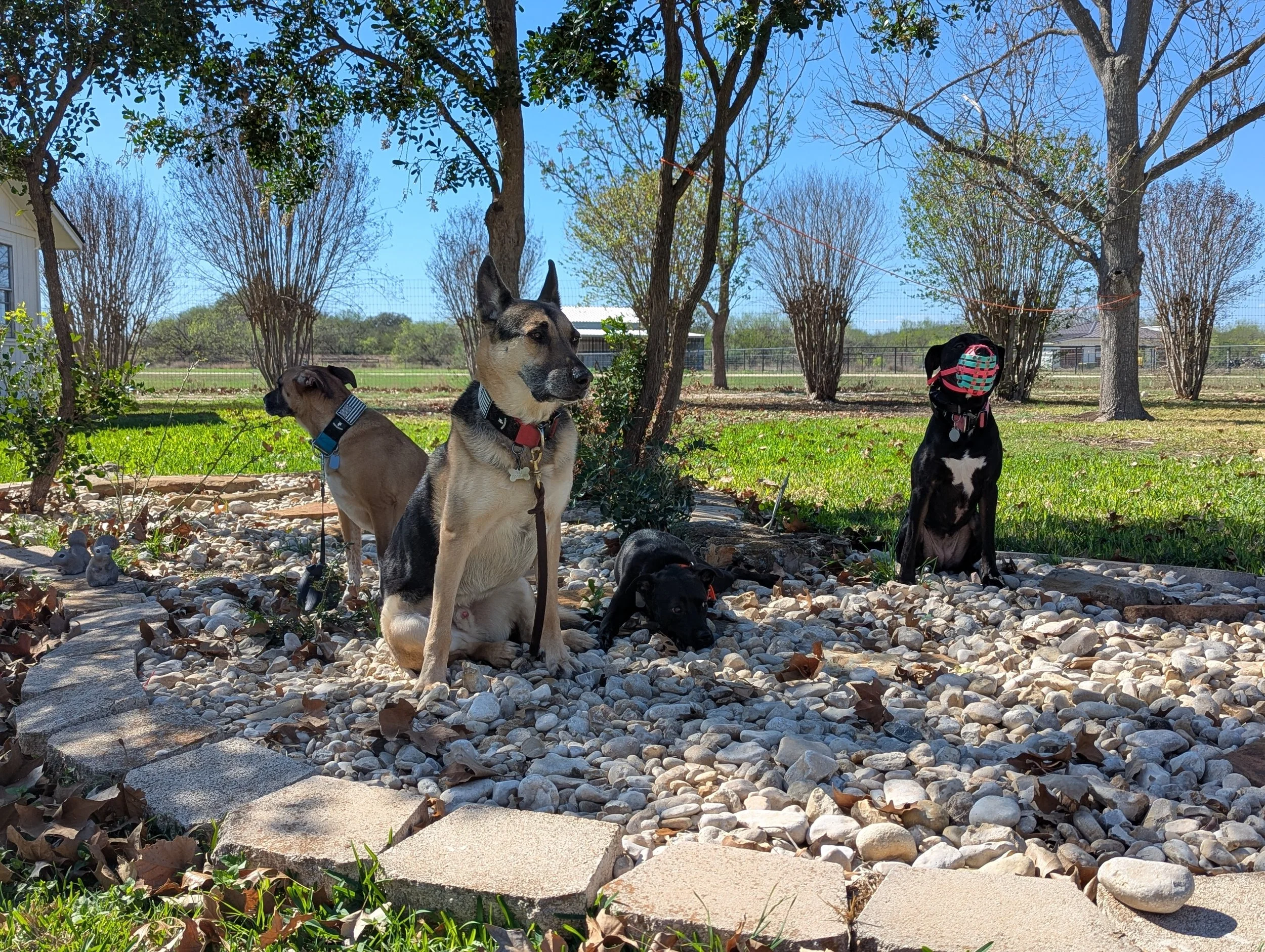
Fear aggression is caused by a dog’s irrational belief that something is a danger to himself or his loved ones. The key word is irrational - it is unreasonable for the dog to believe he is in danger. Lunging at strangers on walks, barking at the vacuum, and aggression towards friendly dogs that approach are common examples. The goal of fear aggression is to make the “danger” go away. The dog is often unintentionally reinforced to believe his aggression accomplishes this goal, as when he shows aggression he is often quickly taken away from the situation.
Dominance Aggression
Dominance aggression is caused by a dog’s belief that he has first right to limited resources. To a dog, limited resources are usually resting places, food, toys, and affection. Dominance aggression is one of the only forms of aggression that involves the dog putting teeth on pack members. Dogs with dominance aggression are often:
Allowed on human couches and beds
Given free access to toys
Given free access to food
Initiating affection from their humans constantly
Described as “pushy” or “demanding”
Described as becoming aggressive “out of nowhere”, or biting “for no reason”.
The goal of dominance aggression is to control a resource. A common example is when a dog bites pack members who get too close to “their human”. Many handlers view this as the dog being protective over them, but in reality, it is the dog viewing them as a resource they need to control. The dog believes their favorite human is a finite source of attention and affection, and the dog must prevent other family members from taking that resource.
This form of aggression is the number one reason dogs severely maim, disfigure, or kill their owners.
In order to address dominance aggression, handlers MUST begin controlling resources and becoming the leader in the eyes of their dog.
Territorial Aggression
Territorial aggression is caused by an internal drive the dog has to protect it’s territory from outsiders. This is an intense drive found in wild wolves, and humans have utilized that instinct through centuries of selective breeding for the purposes of protecting property. Territorial aggression is typically stronger in certain breeds that were historically used as estate or flock guardians, such as Anatolian Shepherds, Boerboels, and the Great Pyrenees, though it can be found in any dog. The goal of territorial aggression is to keep outsiders out of the territory. This form of aggression is often preferred by owners for its security advantages. Sometimes, however, the behavior can become dangerous or unmanageable, requiring training for functional control.
Predatory Aggression
Predatory aggression is caused by a dog’s internal drive to stalk, chase, and kill prey. Dogs are predators. In certain breeds, humans enhanced certain elements of the predatory sequence: orient > stare > stalk > chase > grab-bite > kill-bite > dissect> consume. You can think of these as escalating steps, each of which has their own advantage to human purposes. A breed that stops at staring makes a good pointer, a breed that stops at chasing makes a good herder, and a breed that stops at the grab-bite is good for police work. The goal of predatory aggression is to catch prey. Many dogs incorrectly perceive cats and small children as prey, particularly when movement is involved. With this type of aggression, it is very important to ensure that the dog’s drives to chase and bite are being fulfilled through play.
Resource Guarding
Resource guarding is caused by a dog’s natural instinct to protect a claimed resource within their ownership zone. Resource guarding is NOT the same thing as dominance aggression. Resource guarding is limited to protecting objects under the chin and between the front paws such as bones, toys, and food. This is a very natural behavior, and is not at all related to status or dominance. In his 1999 study “Alpha Status, Dominance, and Division of Labor in Wolf Packs”, David Mech demonstrated that EVERY member of the wolf pack would guard food in its ownership zone from ANY other wolf that tried to take it, regardless of status. That means the youngest puppy would display resource guarding against even the Alpha male, every time. If your dog growls at you when you touch him while he’s eating, your response should NOT be to put your hand in his bowl to “prove you’re boss.“ Resource guarding was enhanced in some breeds, like Rottweilers, and bred out in others, like Labradors. The goal of resource guarding is to defend a claimed resource from whoever the dog perceives as a threat to it. Typically, this behavior can be addressed through management. Sometimes, however, if a dog is willing to leave a resource in his possession to bite, it requires more advanced training.
Fear Biting
A fear bite is caused by a dog’s reaction to pain or anticipation of pain. This is seen in dogs who would generally prefer flight (running away) if it was an option, but when unable to flee, will resort to biting. The goal of a fear bite is to prevent pain. Common scenarios are when cutting a dog’s nails or when getting a shot at the vet. Sometimes older dogs without a history of aggression will develop arthritis and begin to fear bite when they anticipate being touched.
Types of aggression can and often do overlap with each other. In order to effectively address aggression, we must see the dog for what he is and not for what we’d like him to be. Aggression is not always a conditioned response due to prior abuse, and its not always abnormal. Sometimes, its not even a problem - humans have selectively bred for the trait for thousands of years because we’ve found it to be useful. If we have a clear view of what aggression is, then we can have a clear view of what we can do about it.
The Myth of “Rehabilitation”
Rehabilitation means to bring something back to its prior state. A broken arm can be rehabilitated through surgery and physical therapy. However, you cannot rehab something that wasn’t broken in the first place.
It may sound like semantics, but the difference is important. Many people mistakenly view their dog’s aggression as a temporary “illness” that training will forever “cure”. The reality is, while environment plays a role, there is very often a genetic component to aggression. The dog is born that way; there is no prior state for them to return to. That is not bad or wrong, it just is. It becomes a problem, however, when it becomes a problem for you.
So what can we do to address aggression that is not solely a learned behavior?
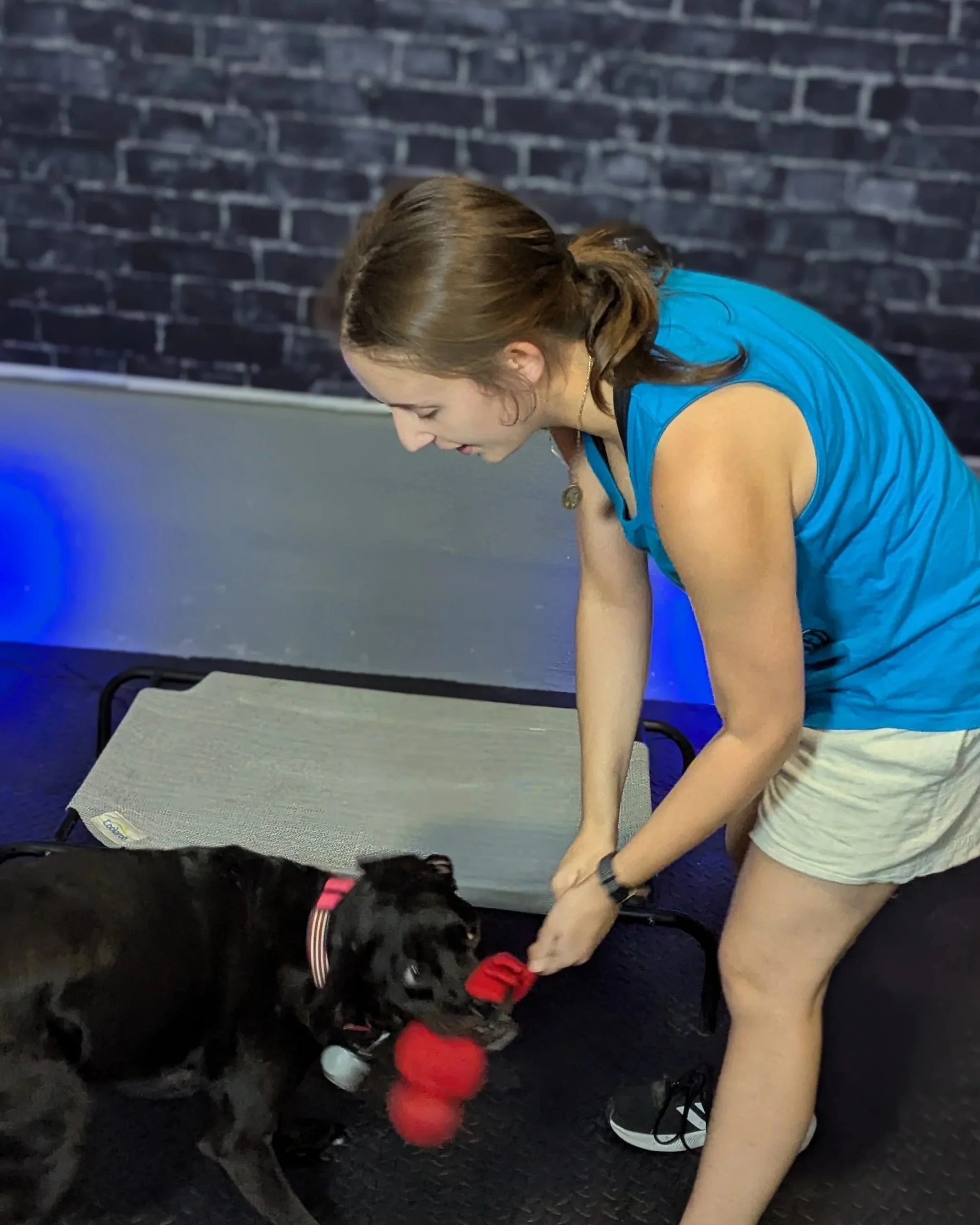
It is still possible for your dog to live a normal life, it just takes a different approach than “rehabilitation”.
First, we will set up an environment conducive to the dog making the right choices. We will educate the handler on how to take an active role in understanding, managing, and being a leader for their dog. The dog’s drives will be consistently fulfilled, and any potential health issues will be addressed.
Then, we will teach your dog to make better choices. Through obedience training, we teach a consistent command structure. The dog will never be corrected for their emotions, but rather for disobeying a command. We show the dog that disobedience will be met with avoidance-level consequences - every time. At some point, in the dog’s mind, making the wrong choice stops being worth it. Making the right choice will lead to fun. This gives us functional control.
Lastly, we will change the dog’s perception by showing him his aggression no longer achieves his goal. The dog is repeatedly brought into the presence of his triggers and expected to remain in command. This may also involve counter-conditioning, where bad associations are neutralized by being paired with good ones. Going forwards, the handler is given the tools to maintain their newfound control of their dog.